
Mini Pendant Lights: Where They Work and How to Choose
In brief
A mini pendant works best when you have a specific spot to light or define. Choose its role first, then compare its actual size, shade opening and complete installed drop with that spot and the lighting you already have.

Key takeaways
- Use a small pendant to define one position, rather than choosing it simply because the room is small.
- Match the light direction and output to the activity; use other fixtures for needs beyond that position.
- Compare the complete fixture and mounting arrangement, not just the “mini” label.
- Include access to the bulb, shade and replacement parts in your shortlist.
Choose one spot and a purpose
Start with the surface or activity you want the pendant to serve. A small pendant can define a breakfast nook, serve one desk position, bring a light source closer to a sink or leave space on a bedside table. Its usefulness depends on that job and the light already available.
“Mini” is a shopping label with no single size threshold across retailers. Compare the fixture’s stated width and height with nearby furniture. A small shade can still have a long suspension, and its size alone does not tell you how much useful light it provides.
| Your spot | What the pendant can add | What to check there |
|---|---|---|
| Compact desk | A light source over one writing position without a lamp base on the desk. | Check the notebook or task with the room lights on, the view of the opening from your chair and access to controls. |
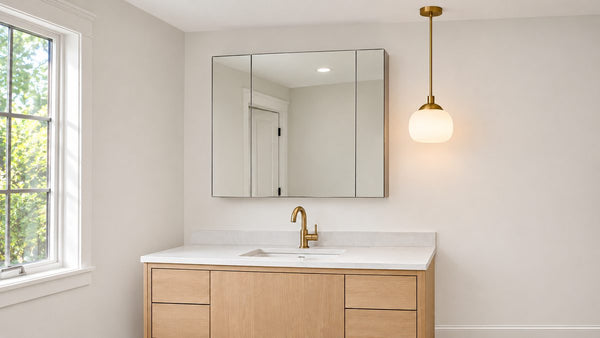
| Small sink or counter | Light directed toward a particular work position. | Stand where you work: do your body or cabinets interrupt the light reaching the surface? |
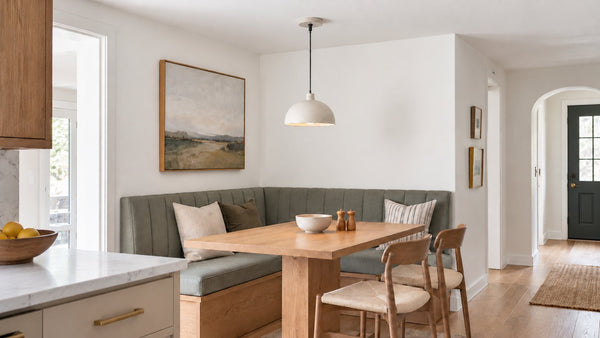
| Breakfast nook | A focal point and light at the table. | Sit at the table: can you see the bulb, and do the surrounding routes have suitable lighting? |
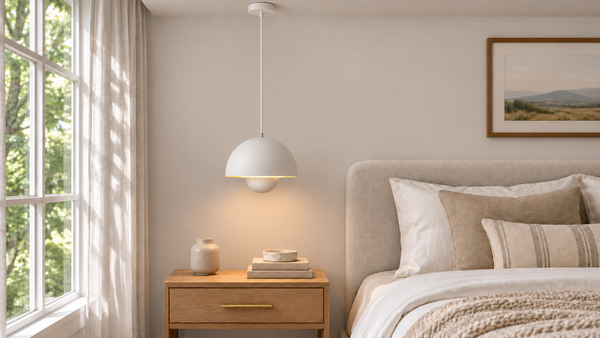
| Bedside surface | Light beside the bed without using tabletop space. | Check the book or bedside task, access to controls and the view while lying down. |
For reading positions and bedside controls, continue to the bedside pendant guide. If you are still comparing single pendants, shared-canopy fixtures and other formats, start with the complete pendant lighting guide.
Match the pendant to the light you need
Choose between a decorative accent, working light or a combination of the two. Check the area at the time you normally use it. Daylight at a sink can hide an evening lighting need; a well-lit table can still sit beside a dim walkway.
- For atmosphere: in a breakfast nook already served by room lighting, choose an outline and lit appearance you enjoy from your seat.
- For a task: at a sink, compare the opening, source position and stated output with the part of the surface you use.
- For a shadowed area: consider a separate ceiling, under-cabinet or reading light aimed at that need, rather than only increasing the pendant bulb’s brightness.
Compare lumens—the stated amount of light—alongside the direction of light. Confirm whether the number refers to one bulb or the complete fixture. Product-photo brightness is not a measurement of the light that will reach your surface.

Sink position
The pendant marks one working position.
Preparation counter
A separate under-cabinet source serves the neighbouring surface.
Compare the size, opening and position
Shortlist a shape that suits the spot and looks comfortable from the position you use. At a compact table, a simple shallow shade can give a clear focal point without adding much visual bulk. An open-bottom shade may reveal the bulb from a low seat, even when it hides the source from the side.
For example, if you want a quieter view from a breakfast chair, compare a source recessed farther inside the shade or a suitable diffuser. If you enjoy seeing the bulb through clear glass, compare the bulb’s appearance as well as its output. The pendant shade materials guide explains these opening and material choices in detail.
Use the existing ceiling connection to narrow the mounting options. One pendant can mark one spot; a long counter may need several lighting positions. Several shades on a shared canopy and separate pendants have different mounting arrangements. Use the kitchen island guide for fixture count and spacing, rather than extending a single small-pendant example along the whole counter.
For actual fixture-to-surface measurements, use the pendant light size guide. When hanging space is limited, compare the candidate’s shortest complete installed drop with the options in the low-ceiling guide.
Check the selected option before ordering
Confirm the configuration you will buy, including how you will use and look after it. Keep these checks beside the product page:
- Fit and mounting: check full width, body height and minimum/maximum installed drop, measured from the ceiling mounting surface to the lowest point. Have your installer confirm the canopy, support and connection position. Cord length alone is a different measurement.
- Light and controls: check the bulb base and size, permitted wattage or integrated LED specification, included items and compatible controls. Confirm any documentation required for the intended location.
- Access and upkeep: check how the shade opens, how a bulb or LED component is replaced, and whether the position is practical to reach for cleaning. Ask about replacement shades or other separate parts if these influence your choice.
Compare pendant lighting designs with these notes beside you; check each product’s actual dimensions and selected configuration rather than treating the whole collection as mini pendants.
Before payment, check the selected size and finish, what is supplied, delivery information and the return terms for your order. When the light arrives, check the shade and supplied parts before installation, keep the packaging and contact the seller about damage or missing items. Follow the model’s instructions for installation and care.
FAQs
Does “mini” mean the same size in every store?
No. Use the listed fixture dimensions to compare candidates across stores; treat “mini” as a browsing label.
Can I use a larger bulb if it has the right base?
Check the bulb’s physical dimensions as well as its base and the fixture’s permitted wattage. In a compact shade, a bulb can fit the socket but extend below the opening or leave too little space for an approved cover.
Does the quoted light output include the bulb?
Check what the figure describes. A replaceable-bulb fitting may be sold without a bulb, while an LED fixture may quote output for the light or its light source. Ask which figure and supplied items apply to your selected option.
Can a plug-in mini pendant replace a hardwired one?
They use different power connections. Compare the product’s stated connection type, outlet or ceiling connection and cord route. Have your installer assess a hardwired change; choose a product designed for the arrangement you need.
What should I ask about a replacement shade?
Ask whether a matching part is available for the exact model and finish, how it attaches and how to order it. Keep the model and order details; a similar-looking shade may use a different opening or retaining part.
Sources
- Lowe’s: Pendant Lighting Buying Guide — background on placement and lighting uses.
- FTC: Shopping for Light Bulbs — brightness and bulb-shopping information.
- Lamps Plus: How to Hang Mini Pendants — mini-pendant placement reference.
Back to How to Choose Pendant Lighting: Size, Shade and Placement
Comments
Have a question or a useful tip? Leave a comment below.