
Ceiling Fan With or Without a Light: Which Is Right for Your Room?
In brief
A lighted fan can contribute general light where a ceiling fixture is being replaced. A fan without a light can work with other room lighting. Compare what you will keep, what you may need to add and how you will use each arrangement after dark.

Key takeaways
- Compare the whole lighting plan, including lights you already have.
- Keep task light where you need it and account for any new lighting or installation.
- Check controls, installed fit and service options for the selected configuration.
1. Compare two plans for the same room
Choose a fan with a light if you need to replace central illumination; consider one without a light when other lighting already meets your needs or you prefer separate fixtures. Start with the same room and the same existing lights. Imagine a bedroom with one central ceiling light and one bedside reading lamp, with no recessed lights. The new fan will replace the central fitting; the bedside lamp stays in both plans. These are illustrative plans, not a lighting design.
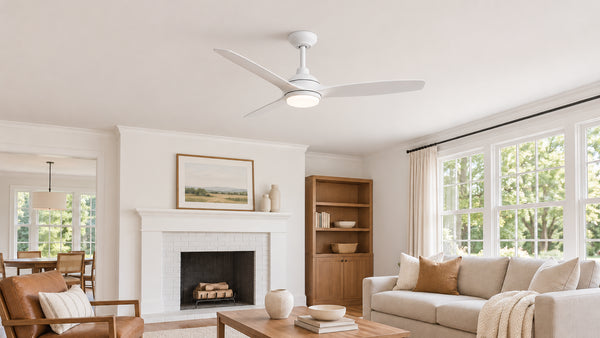
Plan A: A fan with a light
A lighted fan is a useful starting point when the central fixture provides general light. Compare its listed output and shade with the role the old fixture served; keep task lighting for activities it does not cover.
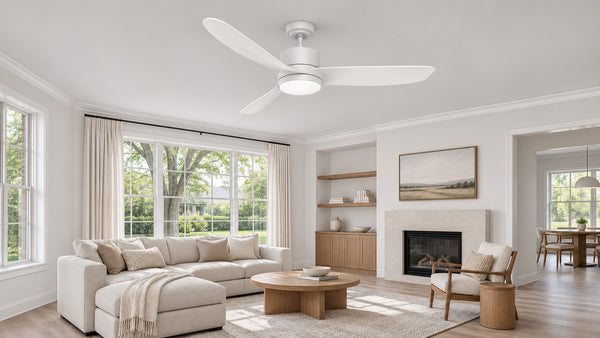
Plan B: A fan without a light
Plan another source of general light before removing the central fixture. A separately positioned floor lamp is one option. Check whether it provides usable light for entering and getting ready.
If you already have useful recessed or other room lighting, you may not need to add another fixture. Check how the room works after dark and how conveniently you can operate the lights.

Kept: bedside reading lamp
New: fan with light

Solid bottom cap; no fan light
Kept: bedside reading lamp
New: fan without light and floor lamp
Illustrative layouts; images do not show measured light output or distribution.
| Compare | Plan A: fan with light | Plan B: fan without light |
|---|---|---|
| Best fit | You want a central light and fan in one fixture. | Your existing lights work well or you prefer separate lighting. |
| Evening use | Check fan and light controls. | Check the other light’s location and switch. |
| What to budget for | Selected fan configuration and installation. | Fan plus any additional light and installation. |
| Maintenance | Ask how the fan light can be serviced. | Maintain the fan and separate lights. |
Browse fans with lights or fans without lights; confirm the exact option on the product page.
2. Choose controls and a maintenance route
Choose controls and a service option that fit everyday use.
- Airflow at bedtime: Confirm the fan can run independently with its light off.
- Softer evening light: Check dimming support; adjustable color temperature alone does not mean the light dims.
- Maintenance: Check whether the model uses replaceable bulbs or an integrated light, and ask about compatible parts and service. Keep its model number and instructions.
3. Before you order
- Configuration: Confirm with-light or without-light and what is included. “Bulbs not included” does not mean there is no light fitting.
- Fit: Compare complete installed height and required support. Use the mounting height guide for measurements; consult a qualified installer where needed.
- Purchase and support: Check the current delivery, returns and warranty terms and ask about compatible parts.
For the wider buying process, read how to choose a ceiling fan.
FAQs
Do I need a fan light if I already have recessed lights?
Not necessarily. Check whether your existing lights cover the room and activities after dark.
Can a ceiling fan light be the only light in a room?
It can contribute general light, but check the listed output, light distribution and activities in the room. A reading lamp or other task light may still be useful.
Can I add a light kit later?
Only when the exact fan supports a documented compatible kit. Confirm availability before relying on it.
Can the fan run with its light off?
Check that the selected model and controls support separate operation.
What if an integrated fan light fails?
Ask about the exact model’s service and replacement-part options; keep its model details and instructions.
Comments
Have a question or a useful tip? Leave a comment below.